

New Partnership Broadens Reach of Pennington Generation Study
April 13, 2026 · Baton Rouge, LA
Pennington Biomedical and LSU AgCenter partner to expand Louisiana-based family health study
The meals a family eats today, the sleep habits developed as a child and the amount of movement one gets in adolescence may shape health outcomes later in life. Through a new longitudinal, statewide study – dubbed the Pennington Generation study – researchers at Pennington Biomedical are delving into how physical activity, nutrition, sleep and other factors affect children’s health and growth and will examine how those behaviors can relate to weight gain and obesity over time.
A new partnership between Pennington Biomedical Research Center and the LSU AgCenter is now working to broaden the reach of the Pennington Generation health research study by helping to bring it to communities across Louisiana.
With a presence in all 64 parishes, the LSU AgCenter will leverage its nutrition and community health agents across the state to help educate people in their community about the study and help with recruiting participants.
Dr. Peter Katzmarzyk, Associate Executive Director for Population and Public Health Sciences at Pennington Biomedical, is the Pennington Generation study director.
“Pennington Biomedical is thrilled to work with the LSU AgCenter on identifying and recruiting families for the Pennington Generation study,” Dr. Katzmarzyk said. “The combined expertise across the two campuses in community engagement and pediatric obesity will ensure the highest level of impact for the population of Louisiana.”
The study is coordinated with Pennington Biomedical’s Greaux Healthy initiative, an evidence-based public service initiative of Pennington Biomedical Research Center in partnership with the State of Louisiana focused on preventing and treating childhood obesity in the state.
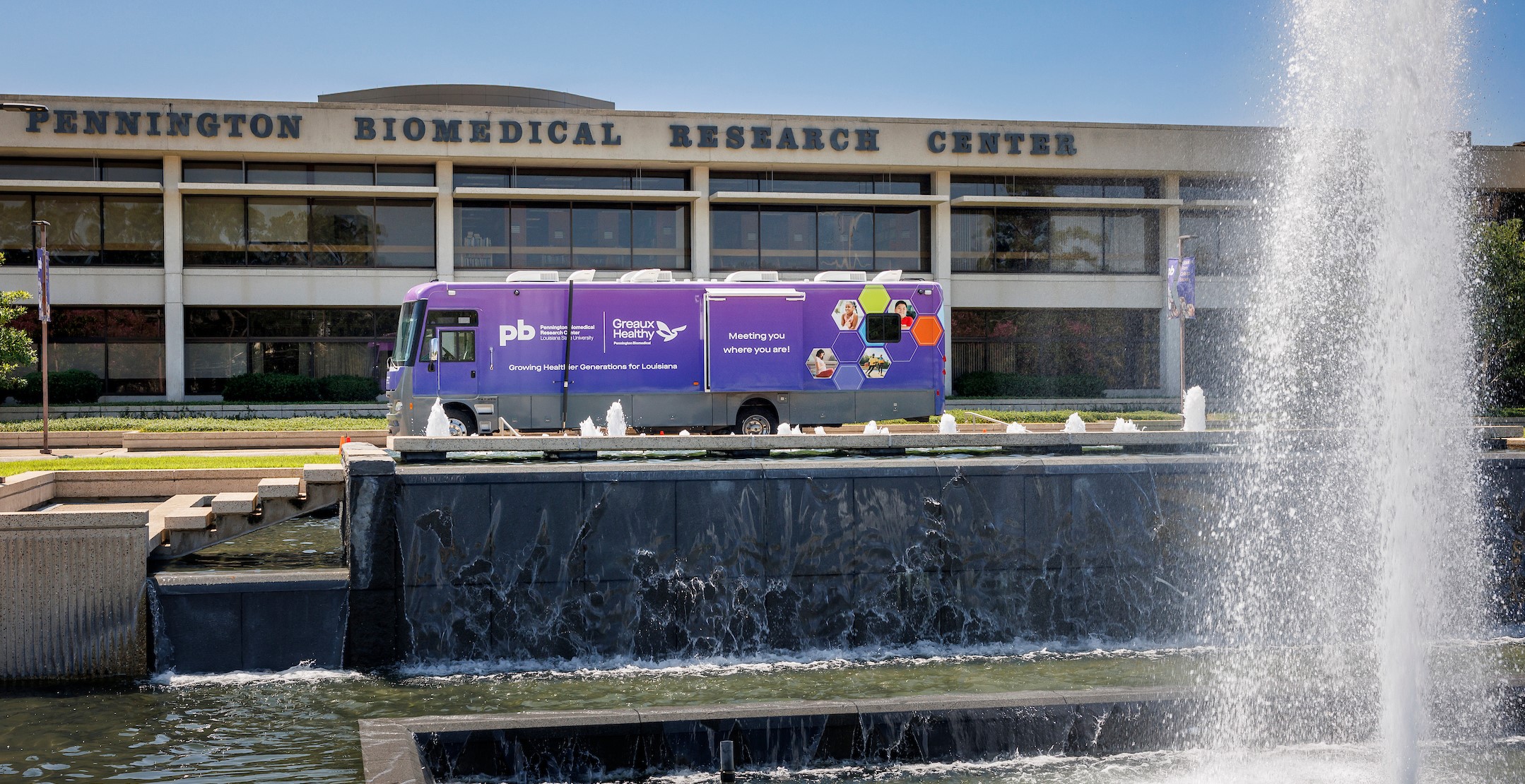
Pennington Generation participants will complete a study visit when they join and have follow-up visits once a year throughout their lives. Pennington Biomedical has a mobile health unit that will conduct the initial visits in participants’ local areas.
Pennington Generation aims to recruit up to 1,500 families in Louisiana representing every region of the state. Participants can be children or young adults from birth through 24 years old, adults aged 25 years and older who are immediate family members of a study participant, or an adult who is trying to have a baby or is pregnant or has a partner who is pregnant.
The study is looking for family-based participation and multigenerational impact.
Denise Holston, LSU AgCenter associate professor and state nutrition specialist, has spent her career building relationships centered on health and wellness between the LSU AgCenter and communities across the state.
Through LSU AgCenter initiatives such as Healthy Communities, the Centers for Disease Control and Prevention’s High Obesity Program and the SNAP-Ed program, Holston has led statewide efforts that generated positive health outcomes at the local level.
“The LSU AgCenter has long-standing, community-engaged relationships with the communities it serves and is viewed as a key trusted information source in rural areas,” Holston said. “Because trust is a key factor in successful clinical or longitudinal research, our agents will be a key communicator about the opportunity and benefits of participation.”
LSU AgCenter agents will coordinate and staff onsite recruitment events in their parishes, identify locations for the Pennington Biomedical Healthy Moves Bus and direct families to the study screener and interest forms. They also will integrate recruitment into their existing programs and outreach efforts.
Recruitment support will focus on four regions of the state, including parishes in the northeast, northwest, central and southwest with emphasis on rural communities.
“This is a really strong fit for both institutions. Pennington Biomedical does world‑class biomedical research, and the LSU AgCenter has a long history of working directly in communities across the state through our extension model,” said Matt Lee, senior vice chancellor and dean of the LSU College of Agriculture. “We are excited about what this partnership can mean for Louisiana families and the opportunity to help make our state healthier for generations.”
This partnership is combining rigorous science with trusted community-based outreach. Pennington Biomedical and the LSU AgCenter are helping ensure that families from every corner of the state have an opportunity to play a role in shaping the future of obesity prevention in Louisiana and beyond.
Louisiana residents interested in learning more about the study or seeing if they are eligible to participate can visit https://greauxhealthy.org/family-hub/pennington-generation.
For more information contact:
Ernie Ballard, Senior Director of Communications & Marketing, ernie.ballard@pbrc.edu, 225-263-2677.
About LSU's Pennington Biomedical Research Center
The Pennington Biomedical Research Center is at the forefront of medical discovery as it relates to understanding the triggers of obesity, diabetes, cardiovascular disease, cancer and dementia. Pennington Biomedical has the vision to lead the world in promoting nutrition and metabolic health and eliminating metabolic disease through scientific discoveries that create solutions from cells to society. The Center conducts basic, clinical and population research, and is a campus in the LSU System.
The research enterprise at Pennington Biomedical includes over 600 employees within a network of 44 clinics and research laboratories, and 16 highly specialized core service facilities. Its scientists and physician-scientists are supported by research trainees, lab technicians, nurses, dietitians and other support personnel. Pennington Biomedical is a globally recognized state-of-the-art research institution in Baton Rouge, Louisiana. For more information, see www.pbrc.edu.
Pennington Biomedical Research Center
6400 Perkins Road
Baton Rouge, LA 70808


