


Dr. Hanim Ecem Diktas Shares Her Journey, Research and Advice as 2025 Outstanding Postdoctoral Fellow
April 28, 2026 · Baton Rouge, LA
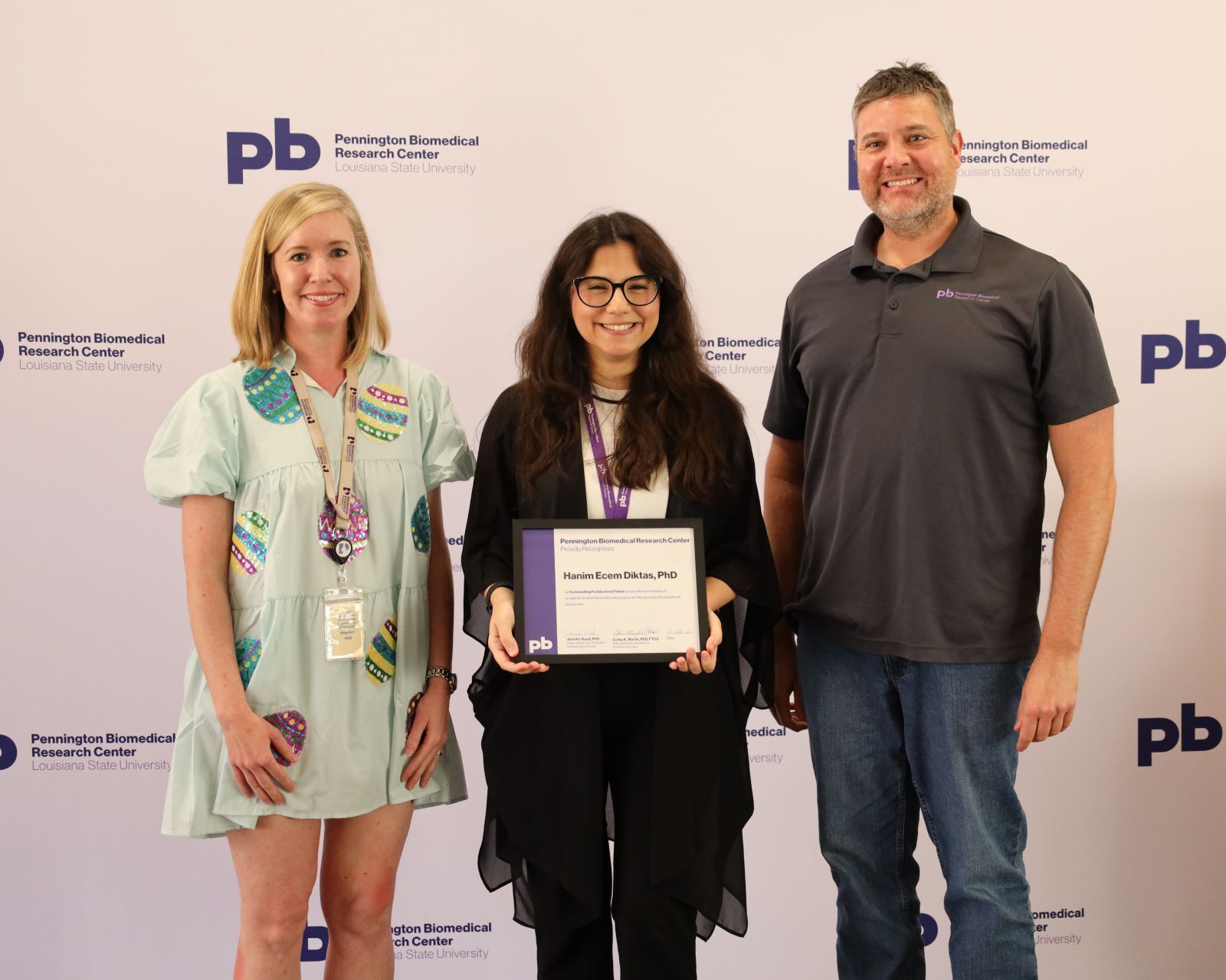
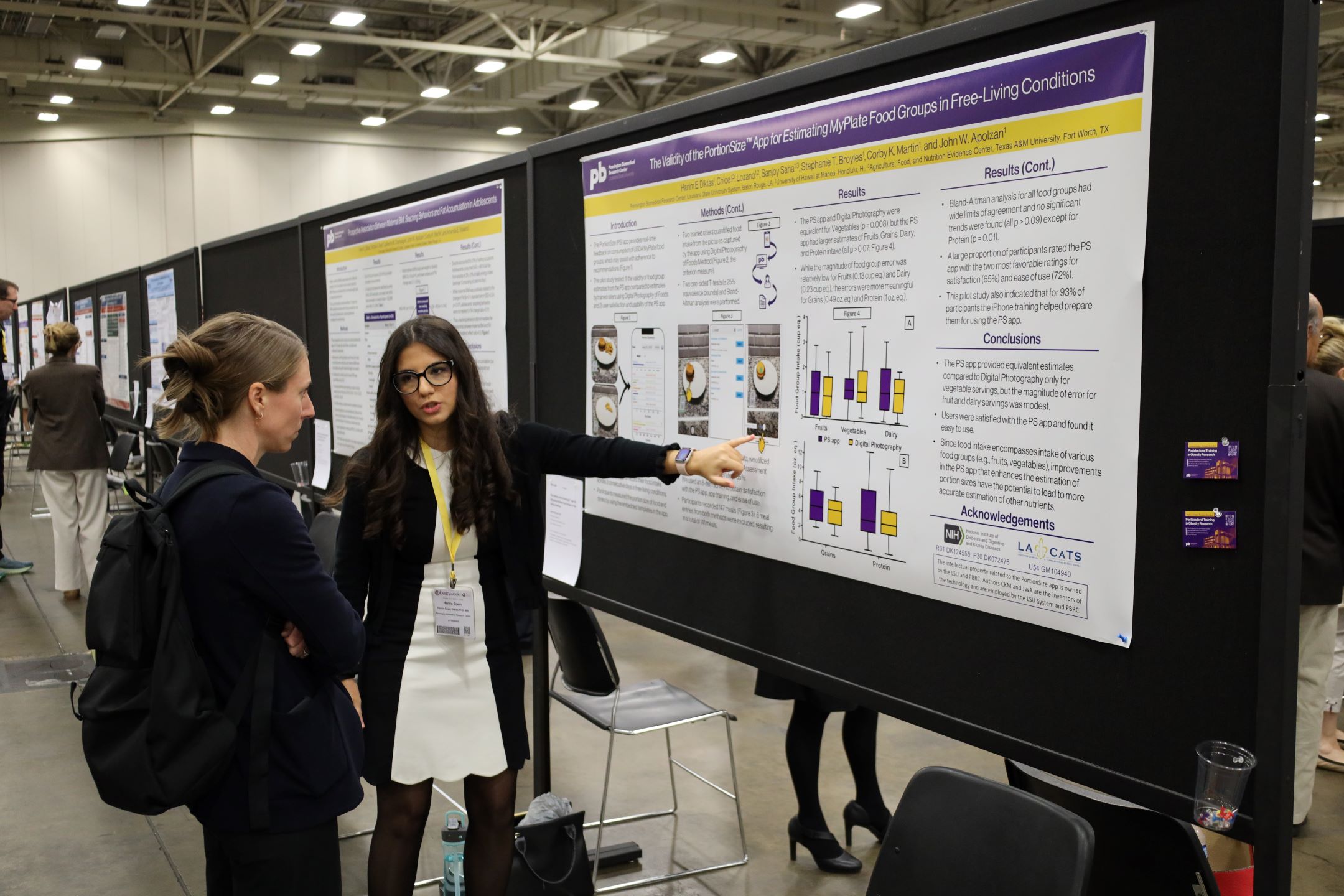
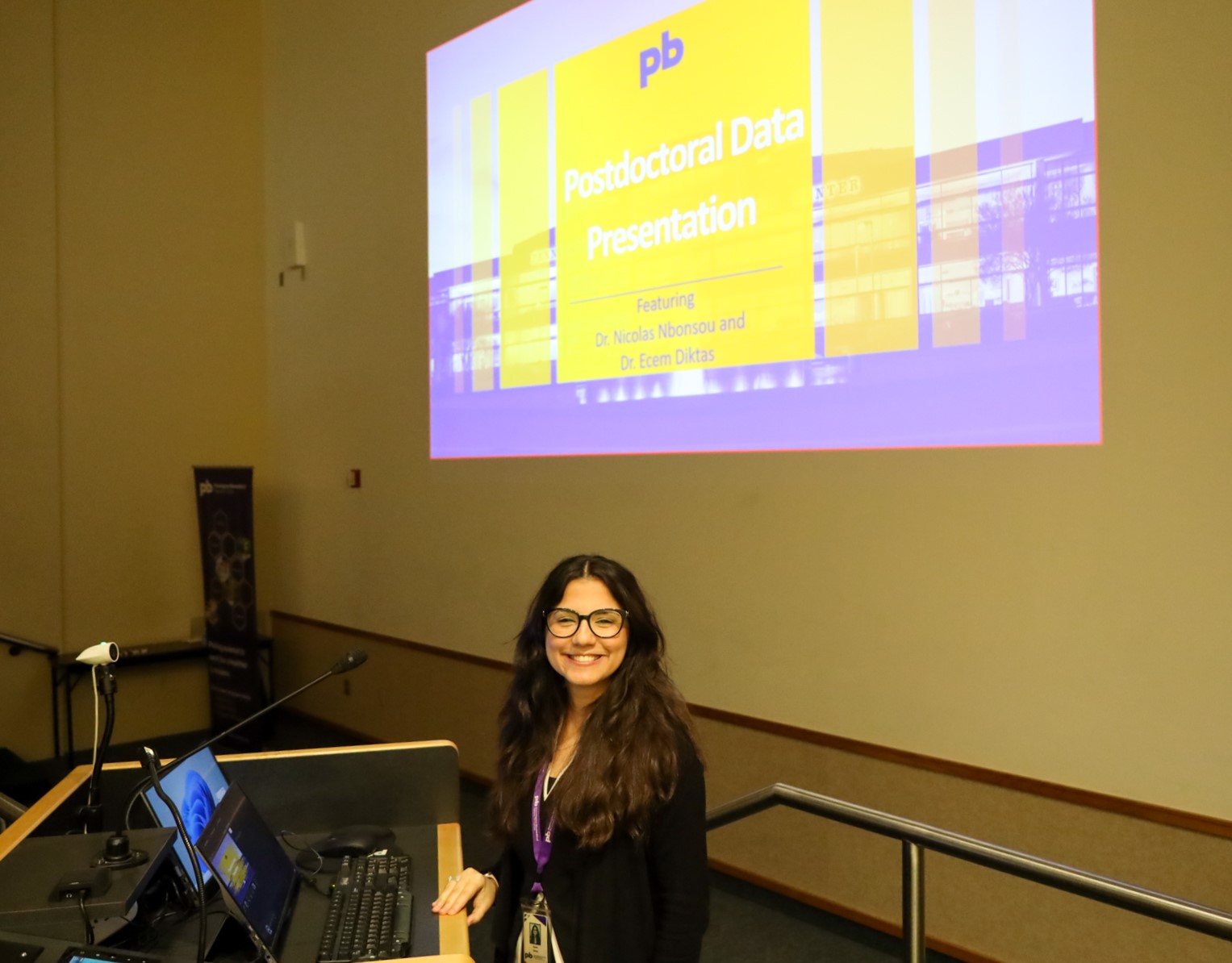
Dr. Hanim Ecem Diktas, a postdoctoral researcher in Pennington Biomedical’s Ingestive Behavior, Weight Management and Health Promotion Laboratory, has been named the Center’s Outstanding Postdoctoral Fellow for 2025. Nominated by Dr. Corby Martin and Dr. John Apolzan, Dr. Diktas has quickly distinguished herself through a strong record of scholarly achievement, including 11 peer-reviewed publications, 22 abstracts and poster presentations, and service as a peer reviewer for five scientific journals.
Her research focuses on understanding children’s eating behaviors in real-world settings and leveraging innovative, technology-based tools to support healthier outcomes for families. In the following Q&A, Dr. Diktas shares insights into her academic journey, her current work and her advice for those pursuing a career in research.
Can you tell us a little about your journey to Pennington Biomedical and what led you to your current research focus?
My path to Pennington Biomedical started with training in Nutrition and Dietetics in Türkiye, where I first became interested in why children and families make different food choices in real-world settings. During my graduate training, I moved toward research questions focused on children’s eating behaviors and wanted to understand how larger portions, highly palatable foods and energy density drive children’s energy intake.
Over time, I became increasingly motivated to move beyond controlled settings and better understand eating in daily life, and this shift led me to Pennington Biomedical, where I could build expertise in technology-based research tools, including wearable devices. These devices are now part of everyday life, and my goal is to use them to promote health and support family-based strategies to reduce childhood obesity.
What makes Pennington Biomedical a unique place to conduct this type of research?
Pennington Biomedical brings together strong basic, clinical and population science; behavioral research expertise; and the infrastructure needed to conduct rigorous studies that integrate novel methods. This environment has been particularly beneficial for my research, as I have received excellent mentorship and have had the opportunity to build interdisciplinary collaborations. In addition, Pennington Biomedical's established research networks make it easier to build partnerships beyond the institution. Through my mentors' initiatives, I was able to connect with collaborators at other universities and exchange ideas on technology development.
Are there any upcoming studies or projects you’re particularly looking forward to in the coming months?
In the near term, I am looking forward to continuing progress on my current NIH fellowship project, which uses longitudinal momentary data to better understand contextual predictors of children’s eating behaviors. We are also about to start data collection for a recently awarded pilot study using smartwatches to detect eating in real time, generating important data to support future innovative family-based intervention designs. I am hoping these projects can help move us from simply observing children’s eating behaviors in daily life to identifying actionable moments when we can deliver timely, personalized support to families.
As a Postdoctoral Fellow, what advice would you give those pursuing a similar field?
In my humble opinion, I would encourage everyone to make choices that expand their skill set. Growth usually comes with challenges, and that is part of the process. The goal is not to ignore failures; it is to acknowledge them, learn what they are teaching us and use that lesson to strengthen the next step.
Persistence is easy to recommend, but resilience is harder to practice; it takes real mental effort, and in a busy academic life, it is expected to feel tired or frustrated. When that happens, we need to come back to our “why,” because the struggles along the way tend to feel much smaller once we see how far we have come. A final word of advice is to never hesitate to ask for help, especially from mentors and colleagues who are genuinely interested in supporting your growth and keeping you connected to your purpose.
For more information contact:
Ernie Ballard, Senior Director of Communications & Marketing, ernie.ballard@pbrc.edu, 225-263-2677.
About LSU's Pennington Biomedical Research Center
The Pennington Biomedical Research Center is at the forefront of medical discovery as it relates to understanding the triggers of obesity, diabetes, cardiovascular disease, cancer and dementia. Pennington Biomedical has the vision to lead the world in promoting nutrition and metabolic health and eliminating metabolic disease through scientific discoveries that create solutions from cells to society. The Center conducts basic, clinical and population research, and is a campus in the LSU System.
The research enterprise at Pennington Biomedical includes over 600 employees within a network of 44 clinics and research laboratories, and 16 highly specialized core service facilities. Its scientists and physician-scientists are supported by research trainees, lab technicians, nurses, dietitians and other support personnel. Pennington Biomedical is a globally recognized state-of-the-art research institution in Baton Rouge, Louisiana. For more information, see www.pbrc.edu.
Pennington Biomedical Research Center
6400 Perkins Road
Baton Rouge, LA 70808


