

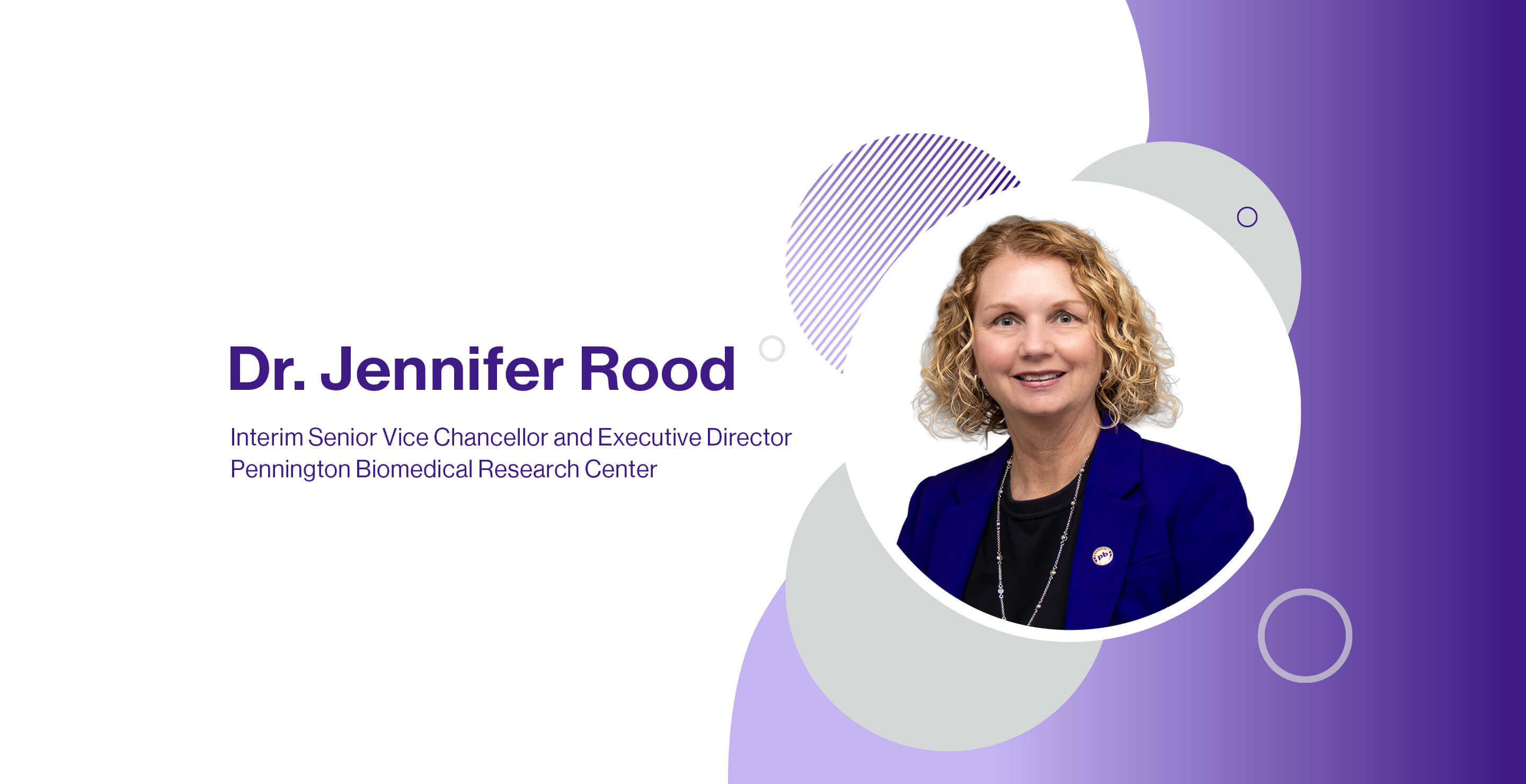
Dr. Jennifer Rood on Leading Pennington Biomedical Through a Time of Transition
March 30, 2026 · Baton Rouge, LA
Get to know Interim Senior Vice Chancellor and Executive Director Dr. Jennifer Rood
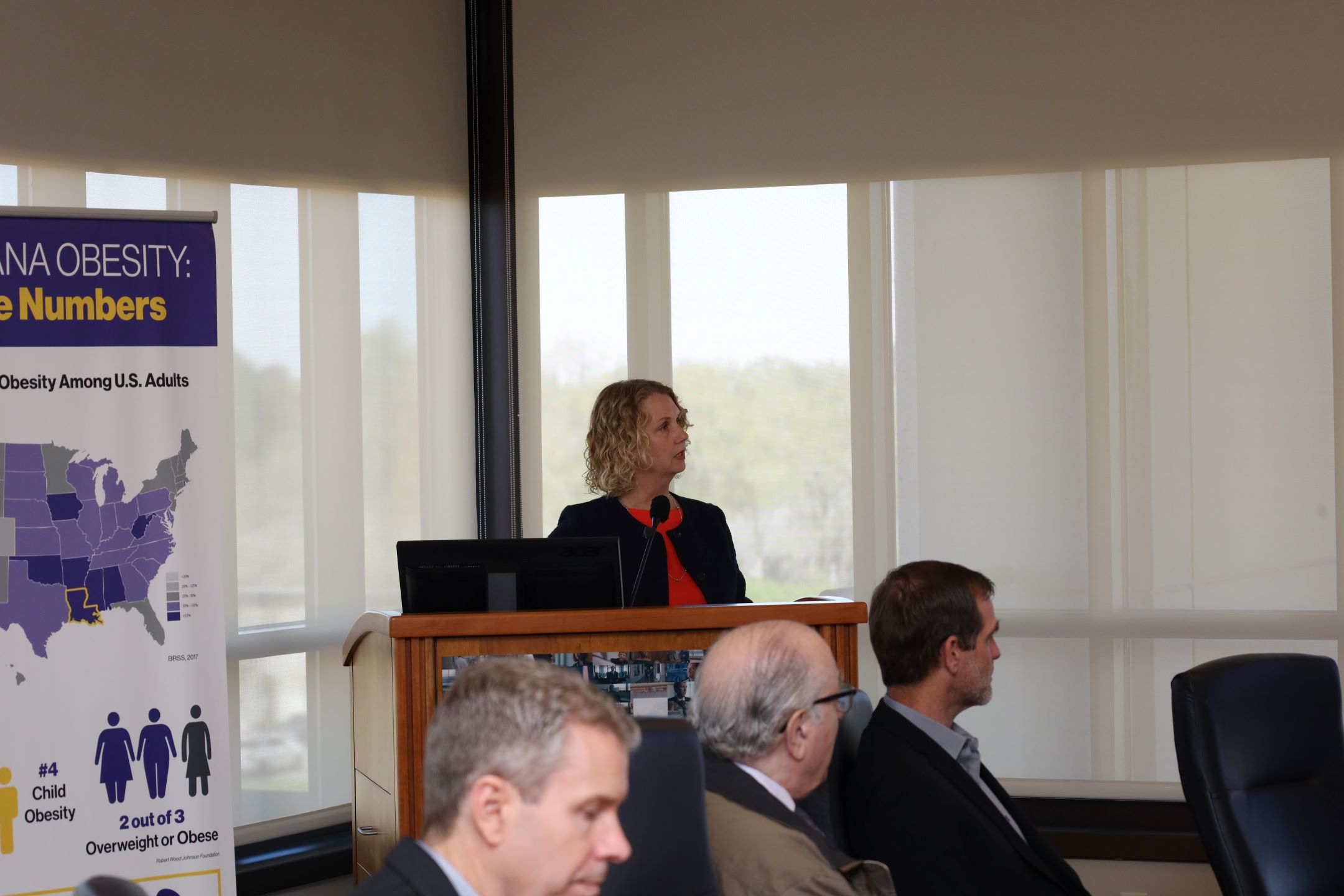
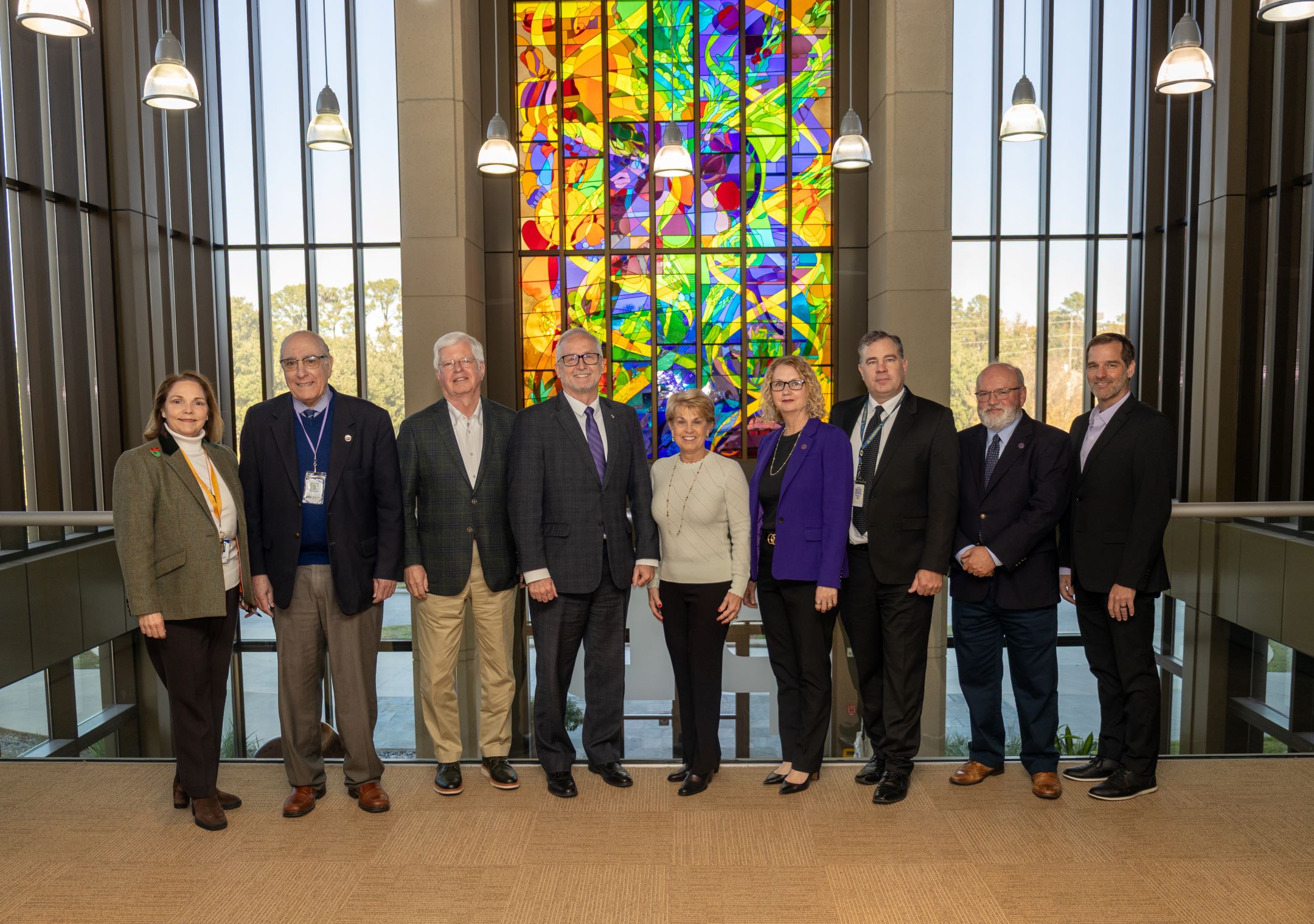

For more than three decades, Dr. Jennifer Rood has been a driving force at Pennington Biomedical, building a career defined by scientific rigor, leadership and impact. Since joining the Center in 1993, she has served in a range of leadership roles, most recently as Associate Executive Director for Cores and Resources, where she oversees the critical infrastructure supporting the Center’s basic, clinical and population research.
Over the years, she has led several of these core functions herself – including the Clinical Chemistry, Exercise Testing and Mass Spectrometry cores—advancing the specialized expertise and technologies that power the Center’s discoveries. Her work also extends beyond the lab as co-director of the Center for Military Performance and Resilience, where her Department of Defense-funded research focuses on nutrition, metabolism and human physiology to enhance performance and readiness.
Now, as senior vice chancellor and interim executive director, Dr. Rood is helping lead Pennington Biomedical through an important period of transition – focused on supporting its people, strengthening collaboration and continuing the momentum of research that improves health in Louisiana and around the world.
Here’s what Dr. Rood had to say about stepping into this role and what comes next.
- Stepping into this role, what does it mean to you personally and professionally to serve as Interim Senior Vice Chancellor and Executive Director?
Serving as Interim Senior Vice Chancellor and Executive Director of Pennington Biomedical Research Center is both a professional honor and a personal responsibility. Professionally, it represents an opportunity to guide one of the world’s leading biomedical research institutions during an important period of growth and transition, supporting our scientists and staff as they advance discoveries that improve health. Personally, it is meaningful to contribute to the continued success of an institution whose mission has such a profound impact on the lives of people in Louisiana and beyond. I am committed to ensuring stability, fostering collaboration, and building on the strong foundation that has positioned Pennington Biomedical as a global leader in metabolic health research and knowledge.
- What are your top priorities for the Center over the next few months?
Over the next few months, my top priorities are ensuring operational continuity, supporting our faculty and research teams and maintaining momentum across the Center’s key scientific initiatives. I am focused on strengthening collaboration across departments, advancing strategic research opportunities and reinforcing the infrastructure and support systems that enable our investigators to succeed. Equally important is maintaining clear communication and stability as we continue to move forward the Center’s mission to deliver solutions from cells to society.
- How do you plan to support our researchers, staff, and ongoing studies during this interim period?
During this interim period, my priorities are to provide stability, clear communication and the resources our researchers and staff need to continue their important work. I am supporting our teams by ensuring operational processes run smoothly and encouraging strong collaboration across departments. My goal is to allow our scientists and staff to remain focused on advancing their studies and our shared mission, knowing they have the institutional support they need to succeed.
- With some of the changes taking place at LSU, what opportunities do you see for strengthening collaboration and visibility of Pennington Biomedical in that process?
With changes taking place across LSU, there is an opportunity to further elevate Pennington Biomedical’s role within the broader LSU system. By strengthening partnerships across campuses, aligning research priorities and increasing collaboration with academic, clinical and industry partners, we can expand the impact and visibility of the Center’s work. This is also a chance to highlight the vital contributions Pennington Biomedical makes in advancing scientific discovery, improving health outcomes and supporting the state’s economic and research priorities.
- What message would you like to share with our employees, partners, and supporters as you’ve taken on this role?
As the Interim Executive Director of Pennington Biomedical, my message to our employees, partners and supporters is one of appreciation and confidence in the strength of this institution. Pennington Biomedical’s success is built on the collaboration of our faculty, staff and partners. Advancing the understanding, prevention and treatment of obesity and related diseases requires all of us working together. Support from donors allows us to pursue innovative research ideas, recruit world-class scientists, invest in cutting-edge technologies and accelerate discoveries that might otherwise take years longer to achieve.
Our progress is also made possible by the thousands of individuals who volunteer to participate in research, helping our scientists answer critical questions about metabolism, nutrition, physical activity and disease prevention. The professional dedication of our team of scientists and staff moves our science forward with excellence and integrity. I remain committed to supporting our teams, maintaining stability during this transition, and continuing to advance the Center’s mission of improving health through scientific discovery. Together, we will build on our strong foundation and continue making meaningful contributions to science and to the communities we serve.
For more information contact:
Ernie Ballard, Senior Director of Communications & Marketing, ernie.ballard@pbrc.edu, 225-263-2677.
About LSU's Pennington Biomedical Research Center
The Pennington Biomedical Research Center is at the forefront of medical discovery as it relates to understanding the triggers of obesity, diabetes, cardiovascular disease, cancer and dementia. Pennington Biomedical has the vision to lead the world in promoting nutrition and metabolic health and eliminating metabolic disease through scientific discoveries that create solutions from cells to society. The Center conducts basic, clinical and population research, and is a campus in the LSU System.
The research enterprise at Pennington Biomedical includes over 600 employees within a network of 44 clinics and research laboratories, and 16 highly specialized core service facilities. Its scientists and physician-scientists are supported by research trainees, lab technicians, nurses, dietitians and other support personnel. Pennington Biomedical is a globally recognized state-of-the-art research institution in Baton Rouge, Louisiana. For more information, see www.pbrc.edu.
Pennington Biomedical Research Center
6400 Perkins Road
Baton Rouge, LA 70808


