

Pennington Biomedical Researchers Help Advance New Tool for Analyzing Continuous Glucose Monitoring Data
September 16, 2026 · Baton Rouge, LA
GVC-Calc provides researchers with a scalable and transparent approach to analyzing data from continuous glucose monitors
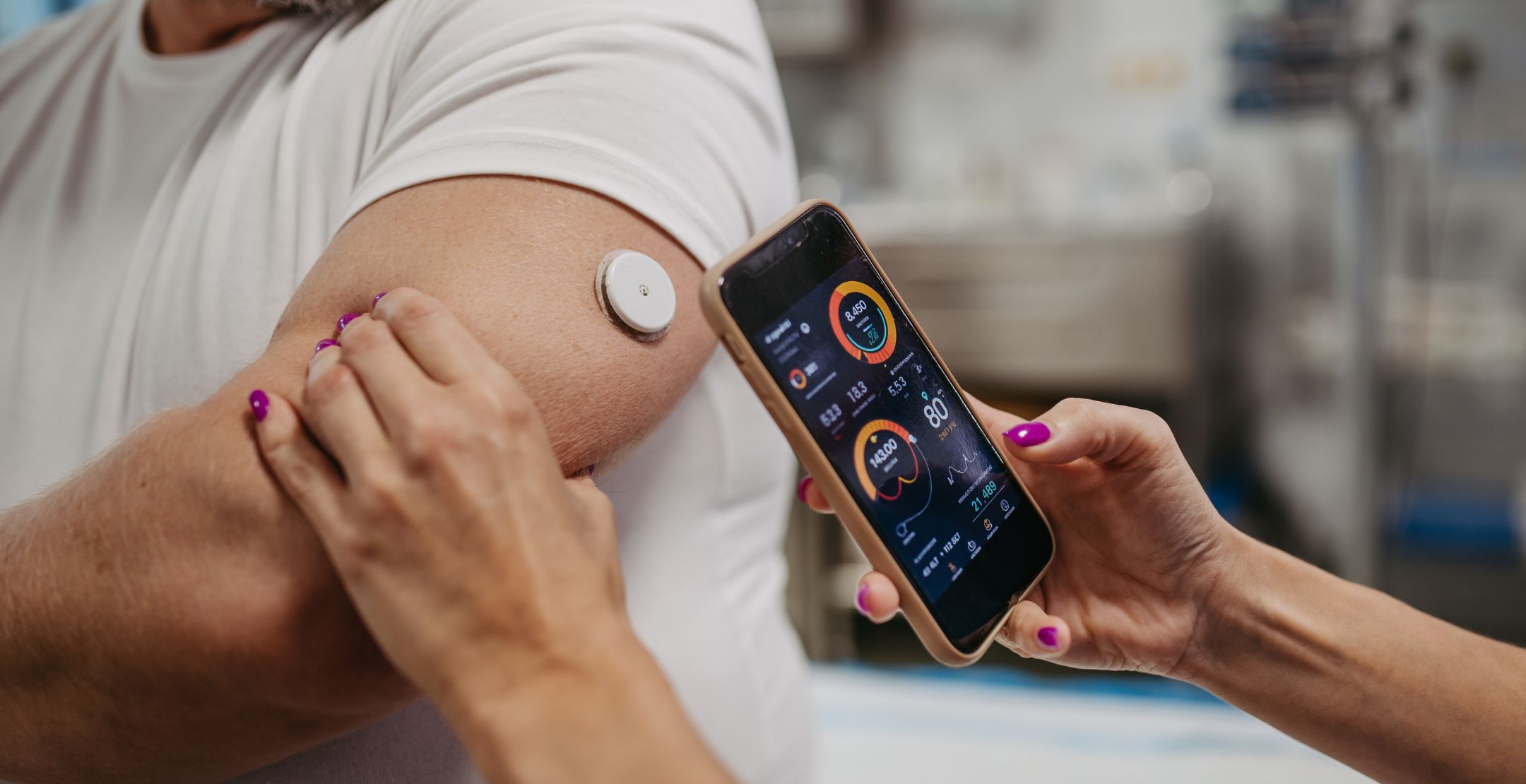
Continuous glucose monitors generate an extraordinary amount of information about how the body regulates glucose throughout the day. As CGM becomes an increasingly important data stream in metabolic research, scientists face a growing challenge: how to turn that immense volume of information into meaningful and comparable insights.
Researchers at LSU’s Pennington Biomedical Research Center are part of a team helping to address that challenge through the development of GVC-Calc, a new platform designed to make large-scale analysis of continuous glucose monitoring, or CGM, data more transparent, reproducible and accessible.
Published in Nature Metabolism, the report, “GVC-Calc enables large-scale analysis of continuous glucose monitoring data,” included researchers from institutions in the United States and United Kingdom, including Pennington Biomedical, the United States Military Academy at West Point, King’s College London, Boston Children’s Hospital and Harvard Medical School.
Dr. Kaja Falkenhain, postdoctoral researcher, and Dr. Leanne Redman, adjunct professor at Pennington Biomedical and Academic Director of the Charles Perkins Centre, were among the international group of researchers who contributed to the development and evaluation of the new analytical platform.
The need for tools such as GVC-Calc stems in part from challenges associated with analyzing CGM data. Existing approaches can differ in how data are preprocessed and how commonly used metrics are defined, making it more difficult to compare findings across studies and integrate results into large-scale statistical and machine learning analyses.
GVC-Calc was developed to address these limitations. The platform can process raw CGM files without relying on a specific manufacturer or proprietary software. It also supports batch processing across hundreds of participants while maintaining a connection between individual-level data and cohort-level results.
The platform incorporates consensus clinical metrics alongside exploratory measures of glucose dynamics, including geometric and probabilistic approaches designed to capture temporal patterns that may not be reflected in conventional summary statistics. Multiple implementations of commonly used metrics are also provided transparently, allowing researchers to align analyses with previous studies and compare results across different analytical approaches.
Pennington Biomedical researchers played an important role in evaluating the platform from a metabolic and clinical research perspective. Falkenhain and Redman, along with other members of the research team, evaluated the software, tested its visualizations and workflow, and provided recommendations to improve its clinical usability and interpretation.
To show how GVC-Calc works, the researchers applied the new tool across four independent studies using CGM across different populations, devices and study designs. The same analytical framework enabled consistent preprocessing, metric extraction and downstream statistical analysis across the diverse datasets. The study demonstrates how a standardized and scalable analytical framework could help researchers more effectively work with increasingly large and heterogeneous CGM datasets.
“Continuous glucose monitoring gives us a much more detailed picture of glucose regulation than we have traditionally had,” said Dr. Falkenhain. “But collecting more data is only valuable if we have reproducible and meaningful ways to analyze it. Tools like GVC-Calc can help researchers better understand the information these devices are generating.”
The complete GVC-Calc platform is freely available as a web application, and its source code is publicly available to support transparency, reproducibility and continued use by the research community at https://gvc-calc.streamlit.app/.
For more information contact:
Ernie Ballard, Senior Director of Communications & Marketing, ernie.ballard@pbrc.edu, 225-263-2677.
About LSU's Pennington Biomedical Research Center
The Pennington Biomedical Research Center is at the forefront of medical discovery as it relates to understanding the triggers of obesity, diabetes, cardiovascular disease, cancer and dementia. Pennington Biomedical has the vision to lead the world in promoting nutrition and metabolic health and eliminating metabolic disease through scientific discoveries that create solutions from cells to society. The Center conducts basic, clinical and population research, and is a campus in the LSU System.
The research enterprise at Pennington Biomedical includes over 600 employees within a network of 44 clinics and research laboratories, and 16 highly specialized core service facilities. Its scientists and physician-scientists are supported by research trainees, lab technicians, nurses, dietitians and other support personnel. Pennington Biomedical is a globally recognized state-of-the-art research institution in Baton Rouge, Louisiana. For more information, see www.pbrc.edu.
Pennington Biomedical Research Center
6400 Perkins Road
Baton Rouge, LA 70808


